Treatment Follows the Diagnosis
Novo uses four main treatment tools: focused shockwave therapy, radial shockwave therapy, EMTT and manual adhesion release. Each reaches tissue differently.
The exam tells us which one makes sense.
Four tools. One clinical strategy.
Each tool reaches tissue in a different way. The short version is below. Each treatment page covers how it works, what a session is like, the research, and who should not have it.
-
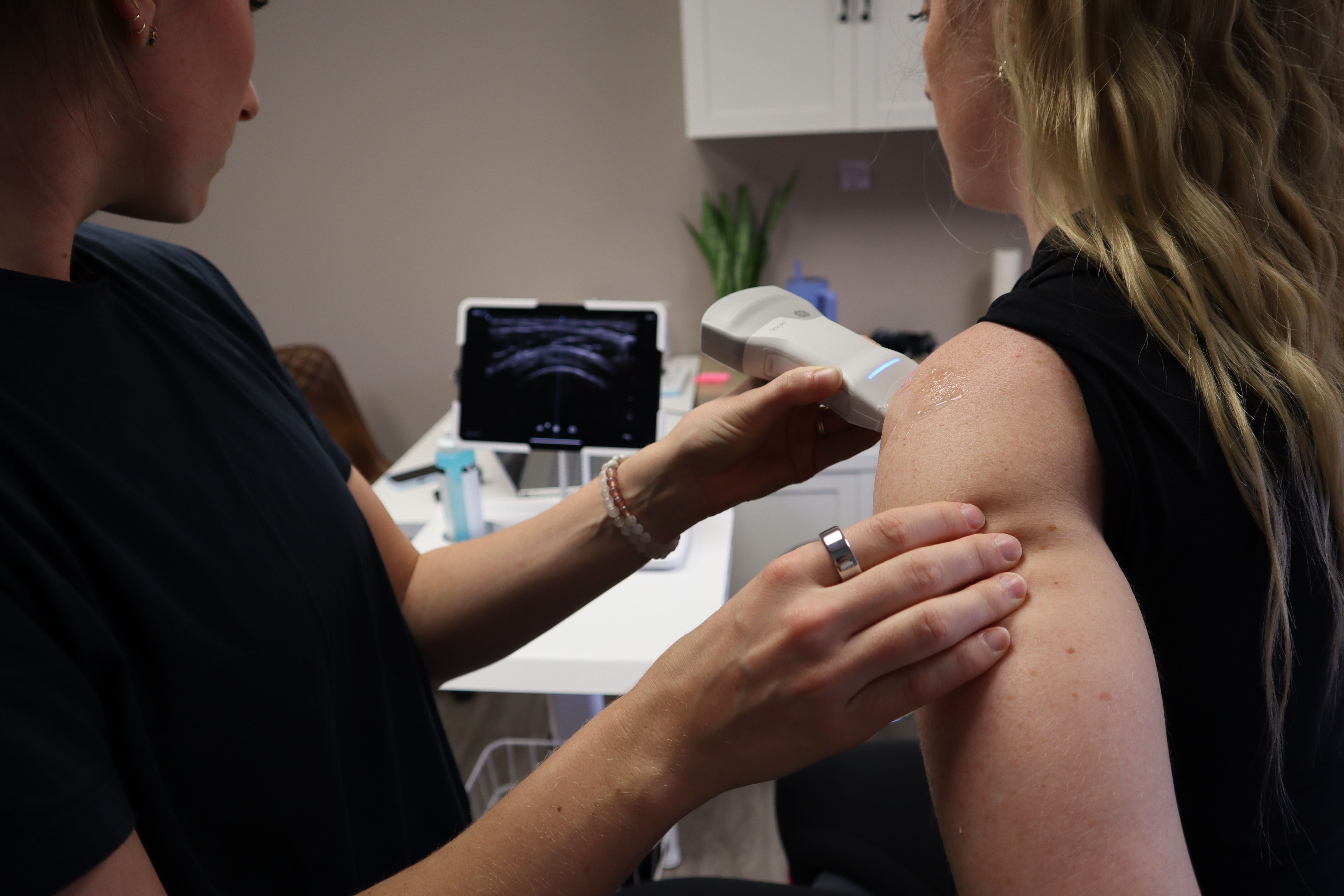
Focused shockwave
Deep, localized treatment for precise tissue targets.
- Tendon insertions
- Calcification
- Deep fibrotic tissue
- Precise depth targeting
Typical visit: $180
Learn about Focused Shockwave → -
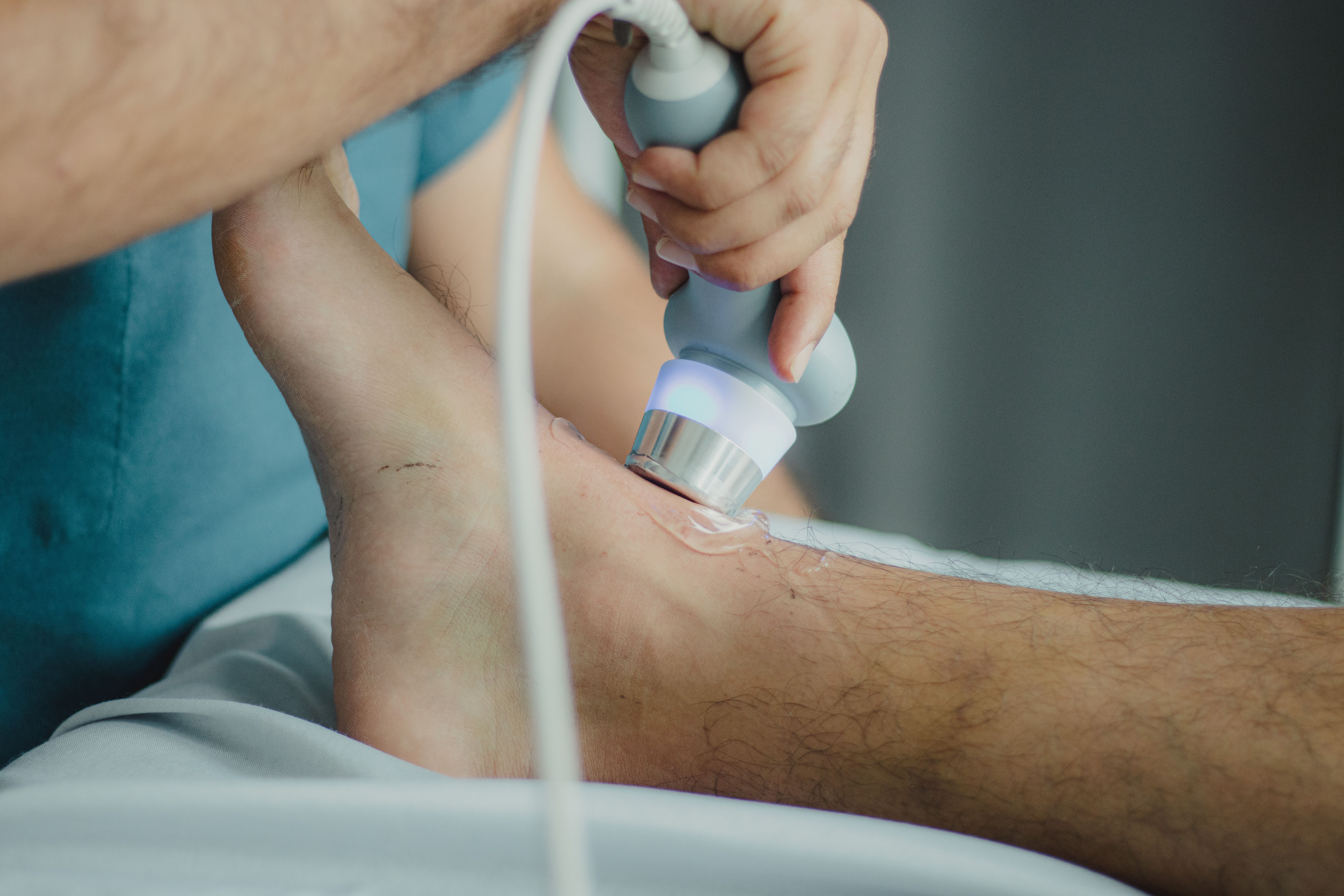
Radial shockwave
Broad mechanical stimulation for superficial muscle, fascia, and tendon.
- Muscle
- Fascia
- Superficial tendon
- Larger treatment areas
Typical visit: $90
Learn about Radial Shockwave → -
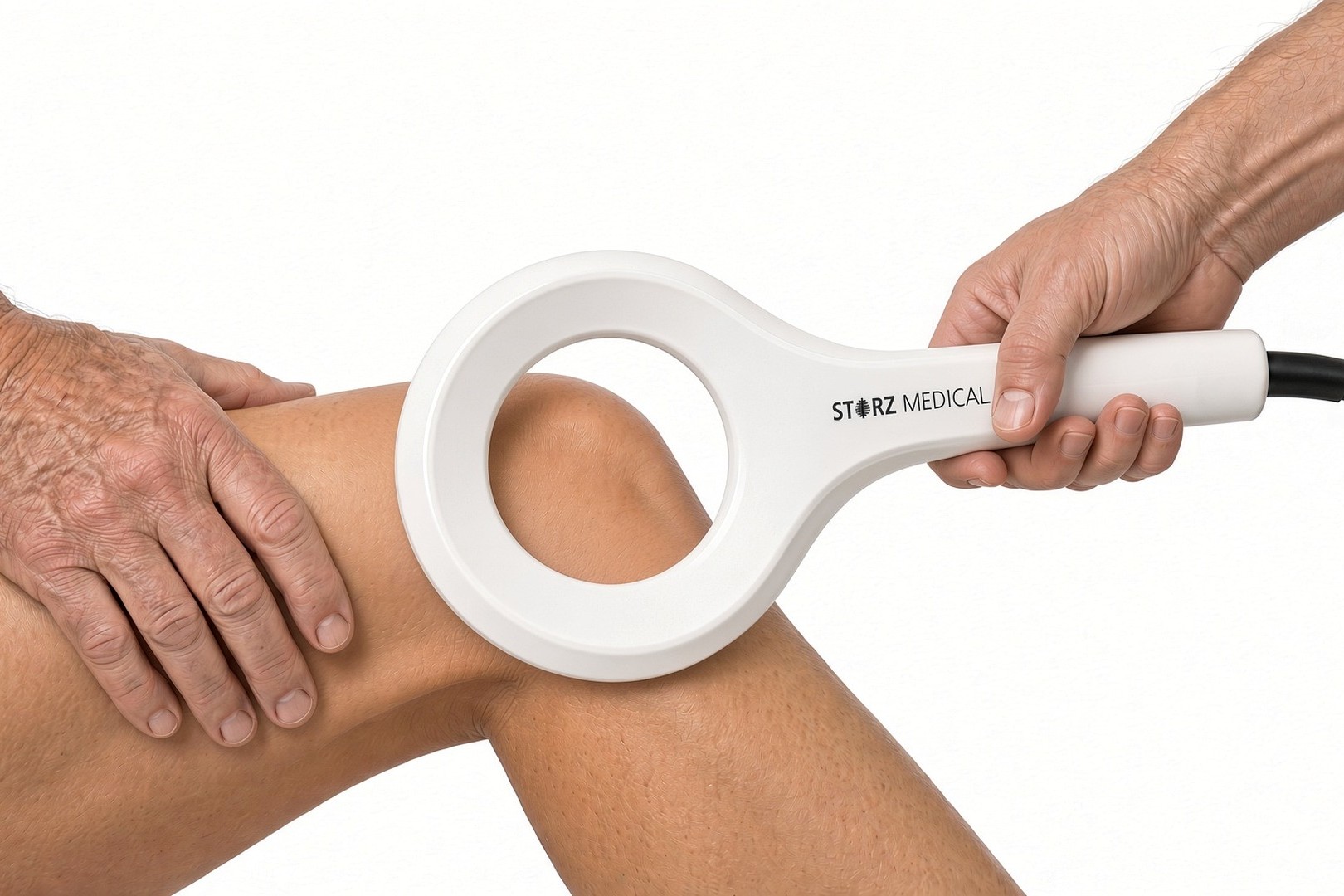
EMTT
High-energy electromagnetic treatment for deeper tissue and joint-related targets.
- Joint-related tissue
- Enthesis
- Degenerative tissue
- Deep treatment field
Typical visit: $90
Learn about EMTT → -

Manual adhesion release
Precise hands-on treatment for restricted muscle and fascial tissue.
- Muscle restriction
- Fascial restriction
- Adhesion
- Restricted motion
Typical visit: $90
Learn about Manual Adhesion Release →
How the four treatments compare
Relative character only. Exact depth and dose depend on the body region, the tissue, and device settings.
| Treatment | Best suited for | Treatment profile | Typical visit |
|---|---|---|---|
| Focused ESWT | Tendons, entheses, calcification | Deep and precise | $180 |
| Radial ESWT | Muscle, fascia, superficial tendon | Broad and relatively superficial | $90 |
| EMTT | Joint, enthesis, and degenerative tissue | Deep electromagnetic field, no mechanical pulse | $90 |
| Manual adhesion release | Muscle and fascial restriction | Direct manual contact | $90 |
Typical visit prices are for follow-up treatment visits. The first visit is a $270 exam with no treatment. Treatment pricing and payment options.
You don’t need to choose the treatment. The exam determines which approach fits the diagnosis.
Same pain, different care
Two people with shoulder pain may need very different care.
One may have a superficial muscle restriction. Another may have a deeper tendon-insertion problem or joint degeneration. Some need imaging or a referral instead of treatment here.
Find the tissue
Muscle, tendon, fascia, enthesis, or joint.
Find the depth
Superficial, intermediate, or deep.
Choose the tool
Manual treatment, radial shockwave, focused shockwave, EMTT, or a combination.
Re-test
Measure whether motion, strength, and symptoms change.
Not sure where your problem fits? See the conditions we treat, or read about shockwave therapy in Denver and what the research says about radial vs. focused shockwave.
Frequently Asked Questions
What is the difference between focused and radial shockwave?
Focused shockwave concentrates energy at a chosen depth for a small, deeper target such as a tendon insertion or calcific deposit. Radial shockwave spreads pressure waves from the surface across a broader, more superficial area such as muscle and fascia. Some patients need one, some both, some neither. Read the full comparison.
How does Novo decide which treatment to use?
By examining you first. The exam finds the tissue involved (muscle, tendon, fascia, enthesis, or joint), how deep it sits, and whether we treat it. We match the tool to those findings, then re-test motion, strength, and symptoms.
Is EMTT the same as shockwave therapy?
No. EMTT uses a rapidly changing high-intensity magnetic field instead of a mechanical acoustic pulse. It can be used alone or with shockwave when each addresses a different part of the same problem. How EMTT works.
Do I receive treatment during my first visit?
No. The first visit is a $270 new-patient exam. Treatment begins at a later visit if indicated.
How much does shockwave therapy cost at Novo?
Follow-up visits with radial shockwave, EMTT, or manual treatment are $90. Focused shockwave visits are $180. The new-patient exam is $270. See our pricing page.
Last reviewed: September 2026
Start With the Exam
Not sure what treatment you need?
You don’t need to know before you come in. We examine the problem first and determine whether treatment at Novo makes sense.
$270 comprehensive exam · No treatment on the first visit
Questions? Call 720.502.6468